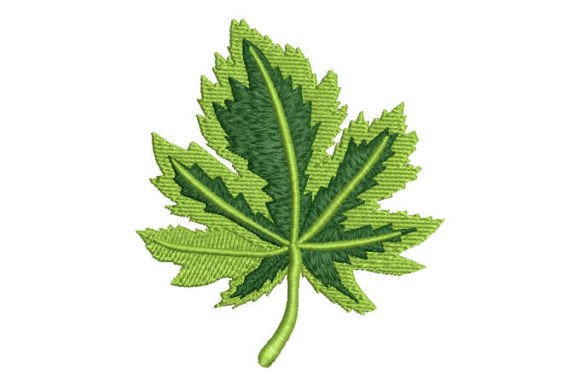
Reviewing the Green Leaf with Branches Design
As a designer who has spent countless hours hooping fabric and troubleshooting tension issues, I approach every new machine embroidery design with a mix of curiosity and skepticism. We have all downloaded files that looked stunning in the preview but turned into a tangled mess on the garment. Today, I am taking a close look at the Green Leaf with Branches Embroidery Design. This is not just about aesthetics; it is about how this piece performs when put to work in real-world embroidery projects for clients and small businesses.
First Impressions and Visual Personality
The first thing that strikes me about the Green Leaf with Branches Embroidery Design is its organic simplicity. In a market saturated with overly complex Floral patterns, this design breathes. It captures the essence of nature without getting lost in unnecessary detail. The layout suggests a gentle, flowing movement, ideal for creating a calm and grounded mood. For school projects or beginner embroidery project attempts, this level of clarity is invaluable. It does not overwhelm the viewer, nor does it overwhelm the machine.
The visual personality here is versatile. It feels equally at home on a rustic linen tote as it does on a modern, minimalist sweatshirt. This adaptability is crucial for Etsy sellers and craft business owners who need assets that can span multiple product lines. When I visualize this stitched out, I see clean lines and a balanced composition that respects the negative space around it. That respect for space is what separates amateur designs from professional-grade design assets.
Real-World Application: The Tote Bag Test
To truly evaluate a design, you must imagine it on a specific product. Let us consider a custom canvas tote bag design. Canvas is a sturdy fabric, but it has a distinct weave. I imagine placing the Green Leaf with Branches Embroidery Design on the corner of a natural-colored tote. The branch structure provides a nice anchor, while the leaf adds a pop of life.
In this scenario, the design acts as a subtle branding element or a decorative accent. It is not so large that it distorts the bag’s structure, yet it is detailed enough to be noticed. For a small shop product, this kind of understated elegance often sells better than loud, oversized graphics. Customers looking for a personalized gift appreciate this touch of handmade quality. It signals that care was taken in the creation process, enhancing the perceived value of the finished product.
Apparel and Custom Wearables
Moving beyond accessories, let us talk about custom apparel. I envision this design on the chest pocket area of a denim jacket or the sleeve of a neutral-toned sweatshirt embroidery piece. Here, the scale becomes critical. If the design is too dense, it will stiffen the fabric, making the garment uncomfortable. If it is too sparse, it might look unfinished. Based on the visual flow of the branches, I suspect this design uses a combination of running stitch for the finer twigs and perhaps a light fill stitch or satin stitch for the leaf body. This mixture is ideal for apparel because it maintains flexibility.
For baby embroidery, such as on a onesie or a burp cloth, the softness of the design is a major plus. Parents prefer gentle, nature-inspired motifs that do not feel heavy or scratchy against sensitive skin. However, one must be cautious with the stitch density. Always check the file details to ensure the density is appropriate for thin, stretchy fabrics used in infant clothing.
Technical Considerations for Stitching Success
While the aesthetic appeal is strong, practical execution requires attention to detail. Before loading this digital embroidery file into your machine, there are several technical factors to review. Since the prompt mentions this is perfect for school projects and home decor, we can assume it is user-friendly, but professional results demand professional preparation.
- Fabric Texture: On textured fabrics like terry cloth or heavy wool, fine details in the branches might get lost. Test on scrap fabric first to see if the definition holds up.
- Stabilizer Choice: A cut-away stabilizer is generally safer for garments that will be washed frequently, while tear-away might suffice for framed art or items that see less wear.
- Thread Colors: The success of this design relies heavily on contrast. On dark fabric, ensure your thread colors are vibrant enough to stand out. On light fabric, consider tonal variations for a sophisticated look.
- Hoop Size: Confirm the required hoop size before starting. If the design is near the edge of the hoop limit, positioning becomes tricky, especially on curved surfaces like caps.
Navigating Challenging Surfaces
Not every surface is forgiving. If you plan to use the Green Leaf with Branches Embroidery Design on an embroidered patch or a cap, you must account for curvature. Caps are notoriously difficult because the fabric is taut and curved. A design with long, straight lines can pucker, but organic branches tend to forgive minor distortions better. Still, I recommend using a top-loading stabilizer and testing the tension settings thoroughly.
Similarly, for holiday embroidery gifts like kitchen towels or aprons, consider the washability. Dense areas can trap lint or fray over time. Inspect the small details in the preview software. Are there any tiny, isolated stitches that might pull out after the first wash? If so, you might need to simplify the design or adjust the underlay settings in your embroidery software if you have the editable version.
Commercial Viability and Brand Consistency
For commercial embroidery professionals and digital product sellers, consistency is key. This design fits well within a broader nature-themed collection. If you are building a brand around eco-friendly or botanical products, the Green Leaf with Branches Embroidery Design serves as a strong foundational asset. It can be paired with other Floral elements to create cohesive sets for wedding gifts or boutique branding.
When creating printable mockup images for your online store, this design photographs well. Its clear lines translate nicely into digital previews, helping customers visualize the final item. This clarity builds trust. Buyers are more likely to purchase a handmade product when they can clearly see the quality of the stitching in the photos. A messy or unclear design leads to hesitation; a clean, professional design leads to conversion.
Final Designer Notes
Before you commit to a large production run or list this as a premium item, do your due diligence. Check the license terms explicitly. Just because a design is suitable for school projects does not automatically grant commercial rights for mass production. Confirm whether you can sell the finished product or if there are restrictions on the number of units.
Also, test the design in black and white on your screen. This removes the distraction of color and lets you judge the structural integrity of the branches and leaves. If it looks good in monochrome, it will look great in color. Finally, always keep your embroidery file organized and backed up. A reliable library of tested designs is the backbone of any successful craft business.
In conclusion, the Green Leaf with Branches Embroidery Design offers a blend of simplicity and elegance that is rare in free or low-cost assets. It is a practical choice for a wide range of applications, from home decor to custom apparel. By paying attention to fabric choice, stabilizer, and stitch density, you can elevate this simple motif into a high-value product that resonates with customers seeking authentic, nature-inspired craftsmanship.